

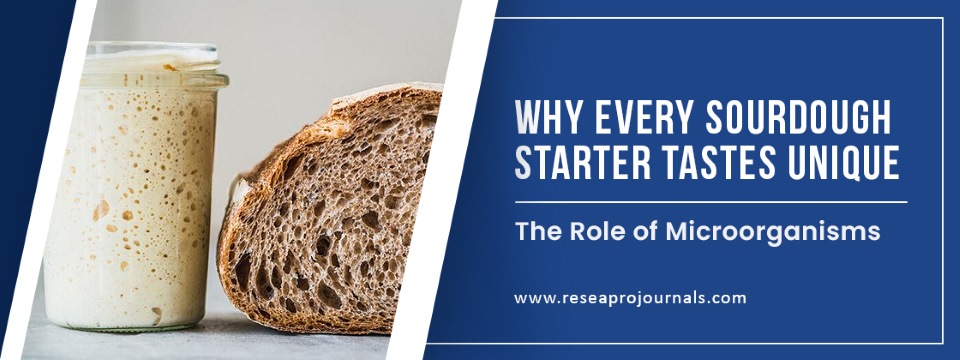
Why Every Sourdough Starter Tastes Unique: The Role of Microorganisms


Introduction
If you have ever baked sourdough bread, you may have noticed something interesting. No two starters taste exactly the same. Even when people follow the same recipe, the flavor can change from one kitchen to another.
This is not a mistake or an inconsistency. It is actually what makes sourdough special. The secret lies in the invisible world of microorganisms that live inside the starter.
Understanding how these tiny organisms work can help you control flavor, improve your bread, and appreciate why sourdough is so different from regular bread.
What is a Sourdough Starter and why does it matter today?
A sourdough starter is a mixture of flour and water that captures wild yeast and bacteria from the environment. Over time, these microorganisms grow and create a living culture.
This culture is responsible for fermenting the dough, causing it to rise and develop flavor. Unlike commercial yeast, which is a single strain, a sourdough starter contains a mix of different microorganisms.
This matters today because more people are returning to traditional baking methods. Sourdough is valued not only for its taste but also for its natural fermentation process and potential health benefits.
How does a sourdough starter work step by step?
The process begins when flour and water are mixed. At first, the mixture looks simple, but it quickly becomes active as microorganisms begin to grow.
Wild yeast from the air and flour starts feeding on sugars in the mixture. As they consume these sugars, they produce carbon dioxide, which helps the dough rise.
At the same time, beneficial bacteria begin to develop. These bacteria produce acids that give sourdough its characteristic tangy flavor.
Over several days, regular feeding allows the culture to stabilize. A balance forms between yeast and bacteria, creating a strong and reliable starter.
What is the core concept behind sourdough uniqueness?
The key idea is microbial diversity. Every environment contains a different mix of microorganisms. This includes the air, the flour, the water, and even your hands.
Because of this, no two starters have exactly the same microbial community. Some may have more yeast, while others have more bacteria. Some bacteria produce mild flavors, while others create stronger acidity.
This variation directly affects taste, texture, and aroma. It is why a sourdough starter in one country can taste completely different from one in another region.
Where is this seen in real life?
Professional bakeries often develop their own signature starters. These starters are carefully maintained and become part of the bakery’s identity.
For example, a bakery in a coastal area may have a starter influenced by humid air and local microbes, resulting in a slightly different flavor profile.
Home bakers also experience this. Even if two people share the same starter, it can slowly change over time as it adapts to a new environment.
This is why sourdough baking feels personal. Your starter becomes unique to your kitchen.
What are the key benefits and limitations of sourdough microorganisms?
Benefits
· Creates complex and rich flavors that cannot be replicated with commercial yeast
· Improves texture and structure of bread
· Supports natural fermentation, which can aid digestion
· Allows bakers to develop unique and personal recipes
Limitations
· Requires time and patience to maintain a healthy starter
· Flavor can be inconsistent if conditions change
· Sensitive to temperature and feeding schedules
· May take practice to fully control results
Visual Concept to Understand This Better
Imagine a simple diagram of a jar filled with flour and water. Inside, show yeast cells producing bubbles and bacteria releasing acids. Arrows can show how these processes affect flavor and rise. Label each part to show how microorganisms interact.
What does the future of sourdough science look like?
Scientists are studying sourdough more closely to understand its microbial composition. Advanced tools can now identify specific strains of yeast and bacteria.
This research may help bakers control flavor more precisely while still keeping the natural process intact.
There is also growing interest in the health benefits of fermented foods, which may increase the popularity of sourdough even further.
Why should you care about this?
Understanding sourdough is not just for professional bakers. It helps anyone improve their baking and appreciate the science behind food.
It also shows how small, invisible organisms can have a big impact on everyday life. From flavor to texture, microorganisms shape the food we enjoy.
Once you understand this, you start to see baking as both an art and a science. Want to improve your sourdough skills? Explore more of our baking science guides and start experimenting with your own unique starter.
Reviews & Comments
No reviews yet. Be the first to write one.