

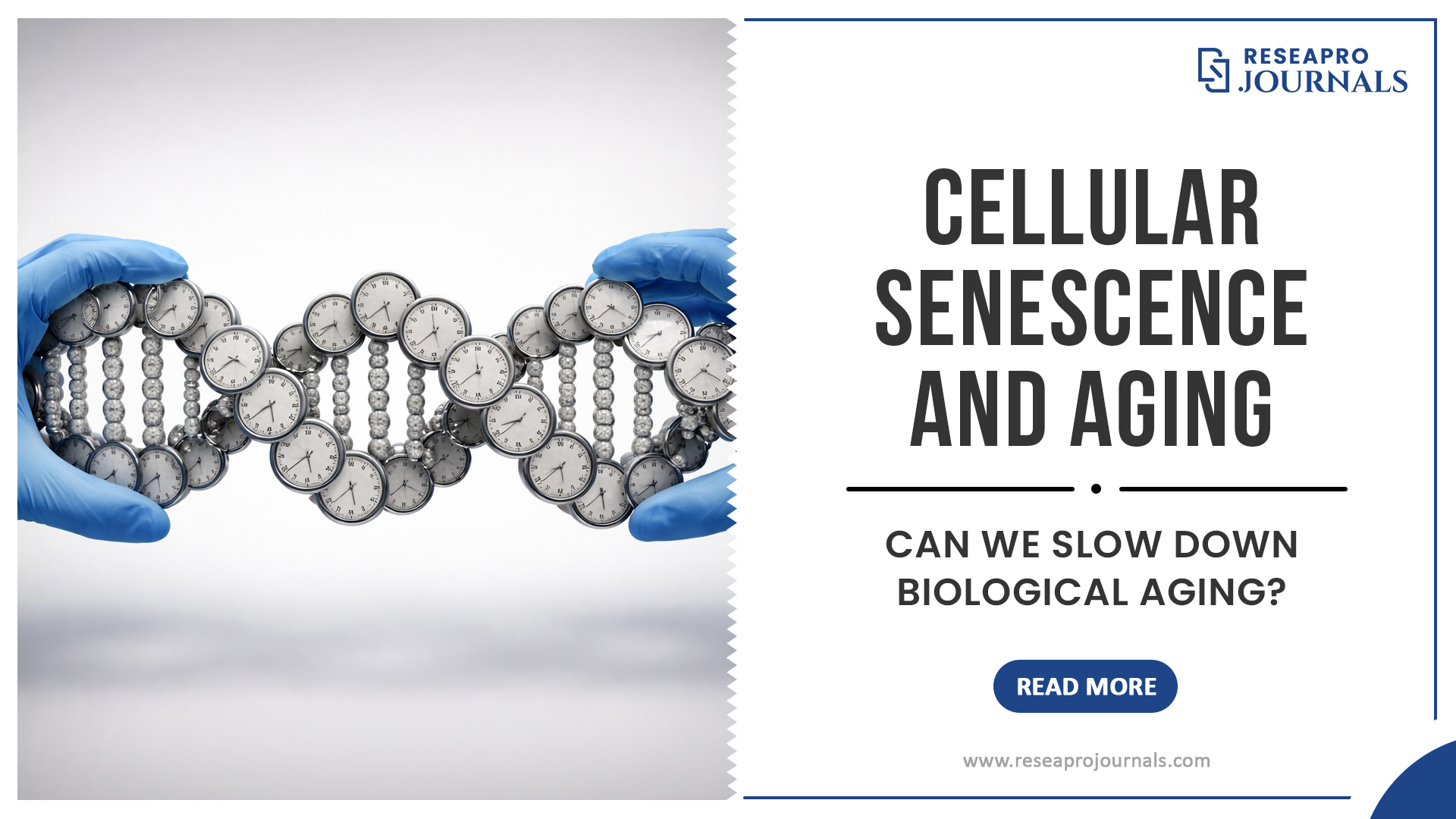
Cellular Senescence and Aging: Can We Slow Down Biological Aging?


Aging is often viewed as an inevitable decline, but modern biology is beginning to challenge that assumption. At the cellular level, aging is not just a passage of time. It is driven by specific biological processes that can potentially be modified.
Cellular senescence and aging are now central topics in longevity research. Scientists are exploring whether slowing down or even reversing certain cellular mechanisms could delay age-related diseases and improve overall health span. For researchers and clinicians, this field offers a promising shift from treating diseases to targeting the root causes of aging itself.
What is Cellular Senescence?
Cellular senescence refers to a state where cells stop dividing but do not die. These cells remain metabolically active and often release inflammatory signals that affect surrounding tissues.
Senescence is triggered by factors such as:
- DNA damage
- Oxidative stress
- Telomere shortening
- Oncogene activation
While this process acts as a protective mechanism against cancer by preventing damaged cells from proliferating, its long-term accumulation contributes to aging and tissue dysfunction.
The Link Between Senescence and Aging
As we age, senescent cells accumulate in tissues. Unlike normal cells, they are not efficiently cleared by the immune system.
This accumulation leads to:
- Chronic inflammation
- Reduced tissue regeneration
- Impaired organ function
The secretions from these cells, often referred to as the senescence-associated secretory phenotype, can disrupt normal cellular environments and accelerate aging processes.
Can We Slow Down Biological Aging?
The possibility of slowing biological aging lies in targeting senescent cells and the pathways that regulate them. Several strategies are currently under investigation.
1. Senolytics: Eliminating Senescent Cells
Senolytics are a class of drugs designed to selectively remove senescent cells from the body.
Early studies have shown that clearing these cells can:
- Improve tissue function
- Reduce inflammation
- Extend lifespan in animal models
While human trials are still in early stages, senolytics are considered one of the most promising approaches in anti-aging research.
2. Senomorphics: Modulating Cell Behavior
Unlike senolytics, senomorphics do not kill senescent cells. Instead, they modify their behavior to reduce harmful effects.
These interventions aim to:
- Suppress inflammatory signals
- Improve cellular communication
- Delay the progression of age-related damage
This approach may offer a safer alternative for long-term use.
3. Targeting Telomeres and DNA Damage
Telomeres, the protective ends of chromosomes, shorten with each cell division. When they become critically short, cells enter senescence.
Researchers are exploring ways to:
- Maintain telomere length
- Enhance DNA repair mechanisms
These strategies could delay the onset of cellular aging and improve cell longevity.
4. Lifestyle and Metabolic Interventions
Biological aging is influenced not only by genetics but also by lifestyle factors.
Evidence suggests that:
- Caloric restriction may slow aging processes
- Regular exercise improves cellular function
- Balanced nutrition supports metabolic health
These interventions, while simple, have measurable effects on reducing the burden of senescent cells.
The Role of Emerging Technologies
Advancements in biotechnology and computational science are accelerating research in this field.
Key developments include:
- AI-driven analysis of aging biomarkers
- Single-cell sequencing to study senescence at high resolution
- Drug discovery platforms targeting aging pathways
These technologies are helping researchers better understand the complexity of aging and identify new therapeutic targets.
Challenges in Anti-Aging Research
Despite significant progress, several challenges remain.
These include:
- Ensuring the safety of long-term interventions
- Understanding the complexity of aging pathways
- Translating animal model results to humans
- Ethical considerations around lifespan extension
Aging is a multifactorial process, and targeting a single pathway may not be sufficient.
cellular senescence and aging expands, the need for reliable and peer-reviewed studies becomes critical. Reseapro Journals provides a platform for publishing research on longevity, cellular biology, and regenerative medicine.
By supporting the dissemination of validated findings, it helps researchers explore new strategies to slow biological aging and improve health outcomes.
Future Directions in Longevity Science
The future of aging research is moving toward integrated approaches that combine multiple strategies.
Emerging trends include:
- Combination therapies targeting different aging pathways
- Personalized anti-aging treatments based on genetic profiles
- Preventive interventions initiated earlier in life
The focus is shifting from extending lifespan alone to improving quality of life during aging.
Conclusion
Cellular senescence is a key driver of biological aging, but it is also a potential target for intervention. Advances in senolytics, genomics, and biotechnology are bringing us closer to understanding how aging can be slowed.
While the idea of significantly extending human lifespan is still under investigation, improving healthspan is already within reach.
The key takeaway is clear. Aging may be inevitable, but its pace and impact can potentially be influenced through science and innovation.
Reviews & Comments
No reviews yet. Be the first to write one.