

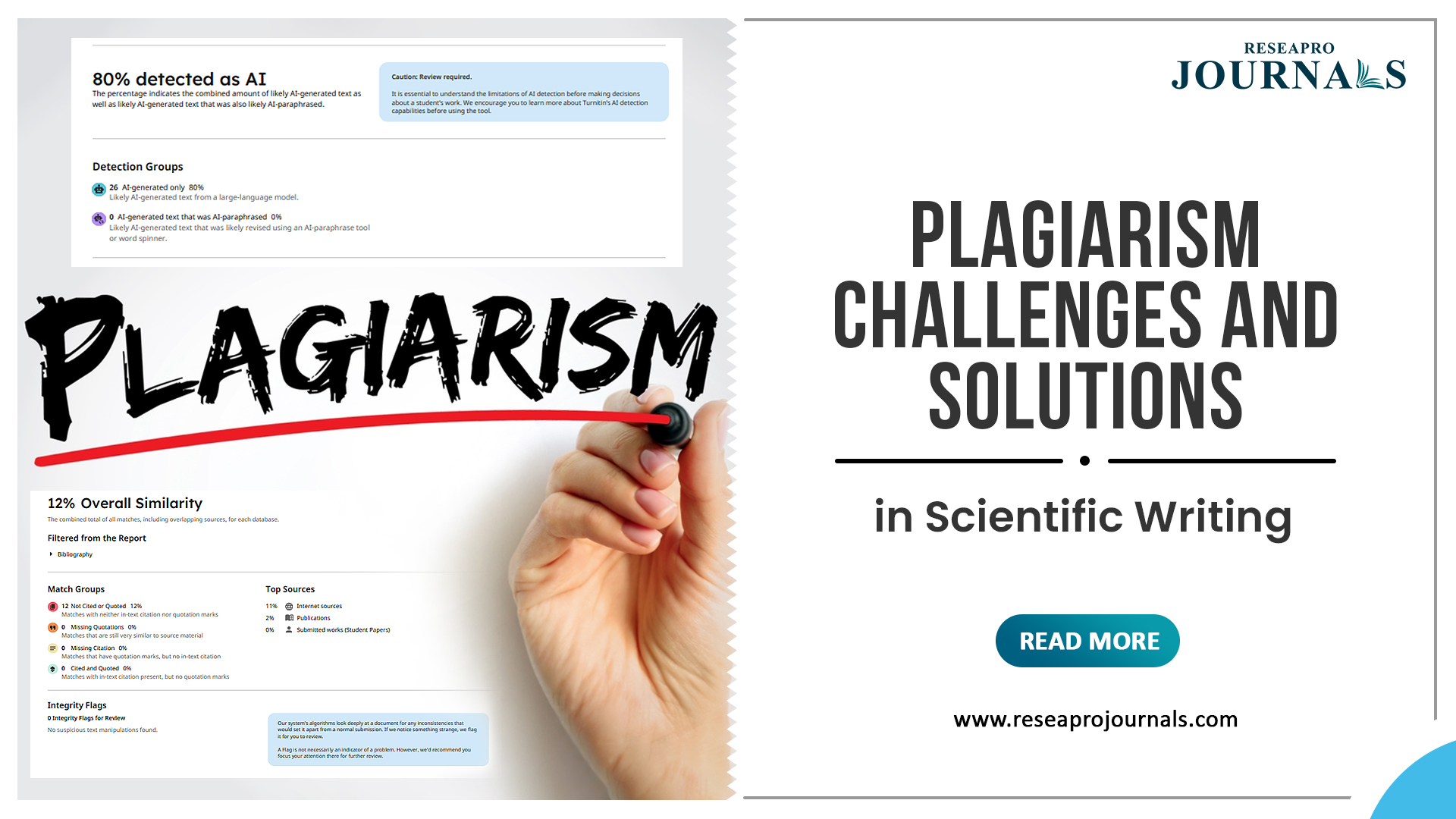
Plagiarism Challenges and Solutions in Scientific Writing


Scientific writing frequently deals with plagiarism, and as AI tools are developing, our understanding of originality is changing. Currently, a lot of academics and students use AI writing, paraphrasing, and rewriting tools to make their documents better. This has made it crucial to discuss similarity plagiarism and AI plagiarism.
What Plagiarism Means
When someone uses another person's words or ideas without giving due credit, it is called plagiarism. In the past, Turnitin and iThenticate used text matching to detect plagiarism. These tools assist authors in fixing sections that require rewriting or citations by highlighting areas where the work overlaps with published content. Harvard University describes plagiarism as “the act of taking credit for work that is not your own, including the use of another’s language, ideas, or work without proper citation.”
Understanding Similarity Plagiarism
Similarity plagiarism refers to text overlapping with existing sources. This may include:
· Replicating sentences from research papers
· Paraphrasing too closely
· Self-plagiarizing your previous writing without citation
· Using common descriptions, definitions, or methods
· Using scientific names of flora and fauna in your research
Understanding AI Plagiarism.
plagiarism is recent and occurs when AI-generated content is used without disclosure. A text may have zero similarity but may still be considered unethical if the content or data is not authorAIgenerated.Thismay include:
· Using AI to write part of a manuscript
· Submitting AI-generated abstracts or discussions
· Using AI paraphrasing tools heavily
· Not rewriting the AI generated content
· Generating data from AI without any sources
Similarity vs AI Plagiarism
| Aspect | Similarity Plagiarism | AI Plagiarism |
| What it checks | Compares text with sources | AI-generated content |
| Detection tools | Turnitin, iThenticate | AI detectors, human review |
| Major concerns | Missing citations | Missing AI-use disclosure |
| Rewriting | Yes | Yes |
| How to avoid it | Cite, paraphrase, and rewrite | Disclose AI use, revise manually |
Why AI Plagiarism Matters
AI tools produce content that sounds ornamental and well-written. Due to this authors may use AI-generated content without fully understanding it or thinking through the ideas. This becomes a concern in academic writing where critical thinking, reasoning, and interpretation are essential. AI tools may also produce text like published work since they are trained on large datasets.
How to Avoid Similarity Plagiarism
· Read the source articles before rewriting
· Cite data, and scientific content from other authors
· Minimize using paraphrasing tools
· Review your similarity report before submission
· Avoid self-plagiarism without citation
How to Avoid AI Plagiarism
· Mention AI usage clearly in your manuscript
· Use AI only for assistance
· Rewrite and paraphrase AI-generated text thoroughly
· Do not use data generated from AI tools
· Add the references manually
· Do not use AI generated images in article
Tools in Plagiarism Detection
These tools compare your text with large databases of published papers, conferences, websites, books, book chapters, and student submissions. They mention copied text for authors to review and revise it.
Common detection tools include:
Turnitin – majorly used in universities to detect similarity and copied text.
iThenticate – used by journals and researchers for pre-publication checks.
These tools help with:
· Identifying copied content from published articles
· Highlighting missing citations
· Mentioning self-plagiarism
Plagiarism Reduction Tools
These tools help rewrite or restructure the text, as the final writing can be more authentic and scientifically strong. They assist authors but still require manual review to ensure clarity and accuracy.
Common reduction tools include:
· Quilbot for paraphrasing
· Grammarly to improve readability
· Wordtune for AI-assisted rewriting
· Mendeley and Zotero for citations
Current Scenario of Plagiarism
Plagiarism in academic writing is becoming more complex due to the rise of digital resources and AI-assisted tools. Earlier, plagiarism mainly involved copying text from published sources but today, it also includes close paraphrasing, undisclosed AI writing, and self-plagiarism.
Many universities report that plagiarism cases have increased, because of growing competitiveness in scientific writing where quantity matters more than quality.
Even experienced researchers face challenges such as:
· Similarities in method section
· Overdependence on paraphrasing tools
· No proper disclosure on AI percentage acceptance
· Lack of paraphrasing and rewriting of AI content
COPE guidelines on plagiarism
COPE is one of the major academic bodies guiding ethical writing and publication standards. Its guidelines help journals create transparent policies for handling plagiarism.
Key measures from COPE include:
· Clear definitions of plagiarism including text plagiarism, data plagiarism, and self-plagiarism
· Detailed guidelines for editors on how to review similarity reports
· Encouraging journals to use similarity detection tools like Turnitin or iThenticate
· Promoting transparency in AI use, and advising authors to disclose any AI tools used in writing or editing
· Encouraging publishers to retract articles in serious plagiarism cases
· Educating authors about proper citation practices and responsible writing habits
Reseapro Journals Viewpoint
Reseapro Journals encourages clear, responsible, and transparent writing. We support authors by:
· Running similarity checks for submitted manuscripts
· Encouraging proper citation and rewriting
· Requiring disclosure of AI tools used
· Helping authors refine their manuscripts before reviewing
Our goal is to help authors avoid plagiarism issues while strengthening the quality and clarity of their work as well-prepared articles benefits both authors and the research community.
Conclusion
Plagiarism whether through similarity or AI-generated text can be avoided with careful writing, proper citation, and honest disclosure. AI tools are useful but understanding and interpretation must be the author’s view.
As academic writing continues to evolve, responsible practices ensure that research remains trustworthy and credible.
Reseapro Journals remains committed to guiding authors in maintaining these standards and supporting them throughout the publication process.
Frequently Asked Questions (FAQs)
1. If Turnitin shows low similarity, does it mean the work is original?
No. Similarity checks only test for text overlap, not AI involvement. You must still confirm human authorship or disclose AI assistance.
2. Can I use paraphrasing tools?
Yes, but use them carefully. Simply rewriting text with a tool can still lead to similarity or AI plagiarism concerns.
3. Are journals accepting AI-written text?
Most journals allow AI-assisted editing but for AI-written sections disclosure is required.
4. How do I know if my rewriting is enough?
If your rewriting shows your understanding and adds clarity, and you properly cite the sources.
5. Is self-plagiarism a problem?
Yes. Reusing your own published text without citation is still considered plagiarism.
Reviews & Comments
No reviews yet. Be the first to write one.